Industry Information
How to Prevent Core Deflection and Crush in High-Tension Battery Material Winding
How core deflection and crush start under high winding tension, and how to specify radial rigidity for battery material rolls. Ask D-TOP.
How to Prevent Core Deflection and Crush in High-Tension Battery Material Winding
Introduction
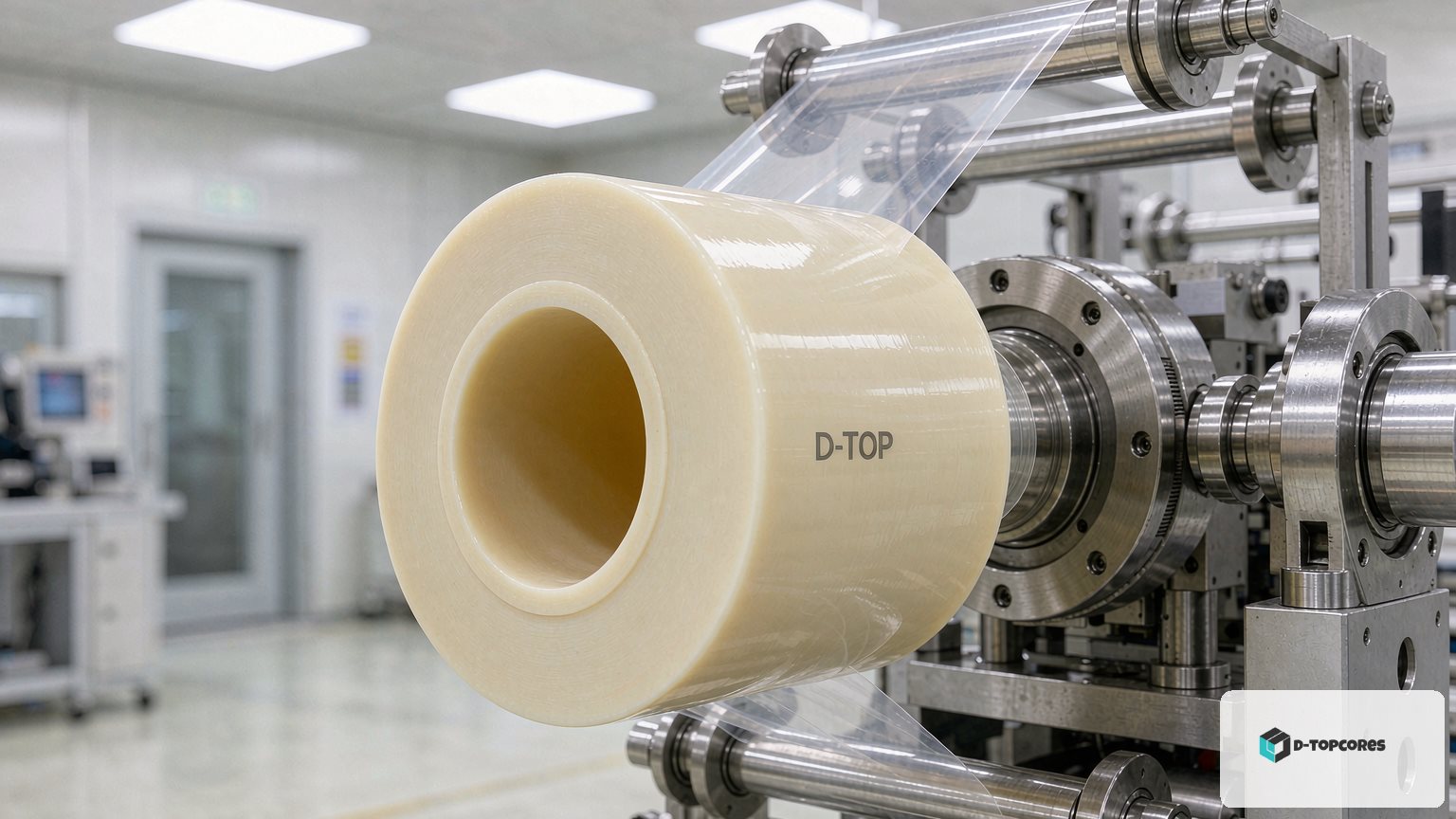
When a battery separator or electrode roll arrives at the slitter with a wavy edge, the investigation usually starts with tension settings and roller alignment. The winding core is rarely checked first, although it carries the entire radial load of the roll. High tension winding builds dense, stable rolls of thin film. Each new layer adds pressure on the layers beneath it, and that pressure is transferred to the core. If the core deforms even slightly, the error repeats on every revolution and becomes a permanent shape defect in the roll. Understanding that load path is the fastest way to prevent it.
How Winding Tension Loads a Core
Radial Pressure and Layer Build Up
Tension applied at the nip becomes residual stress inside the finished roll. Inner layers are compressed by outer layers, and the core takes the reaction force. As roll diameter grows, the total inward load rises while the core geometry stays fixed. A core that survives the first few metres can still creep during the second half of the roll, especially with warm film or long winding cycles. This is why a core that looks sound on the bench can fail on the machine.
Two Failure Modes: Deflection and Crush
Deflection is elastic bending. The bore goes slightly oval, the roll runs out of round and the web tracks to one side. Crush is a permanent collapse of the wall. It usually starts at the chuck contact points where load is concentrated, and once the wall buckles the roll cannot be salvaged. A third, slower problem is creep under sustained load, which turns a small elastic deflection into a permanent set during storage.
Why Wall Build and Geometry Decide the Outcome
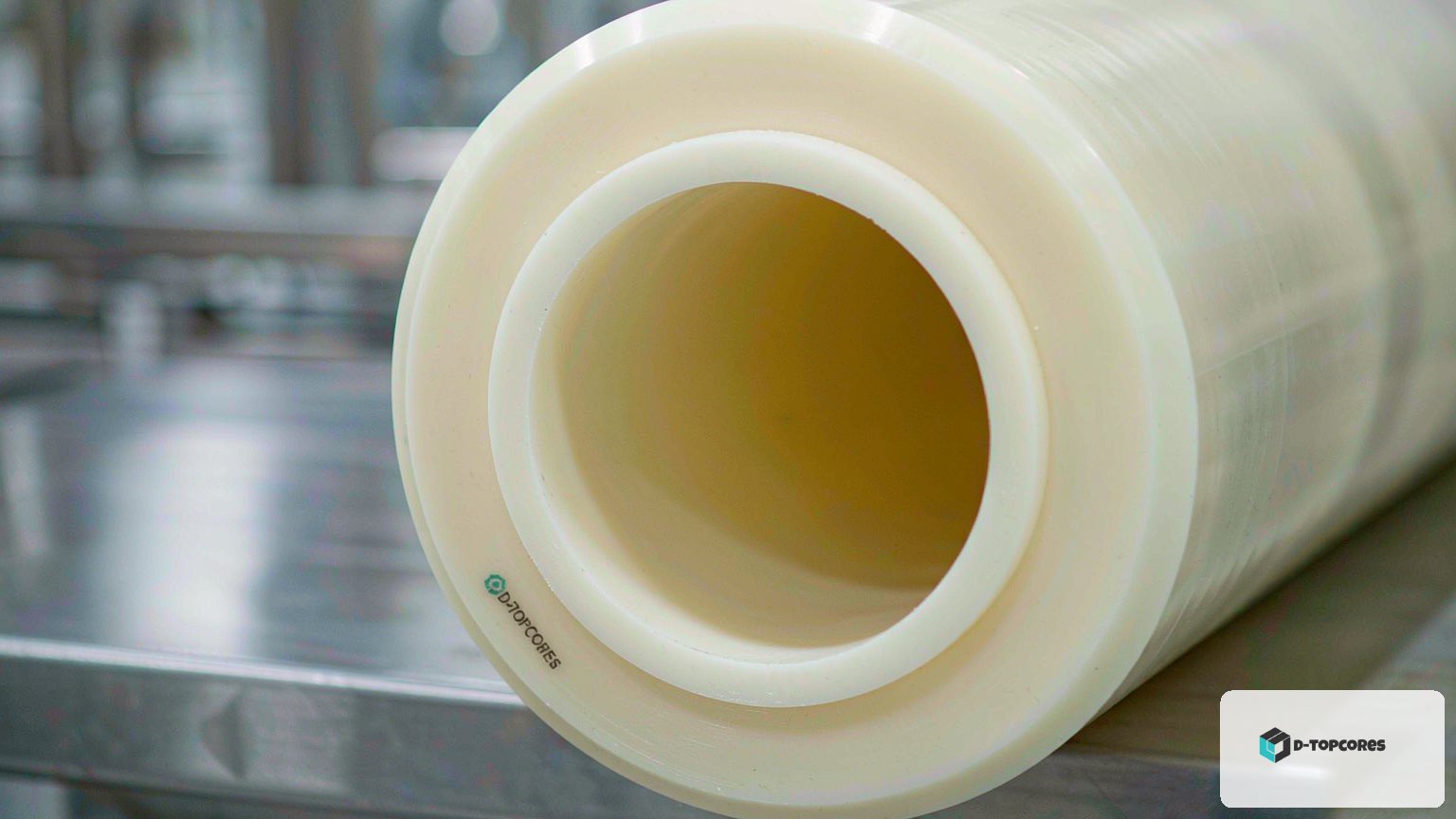
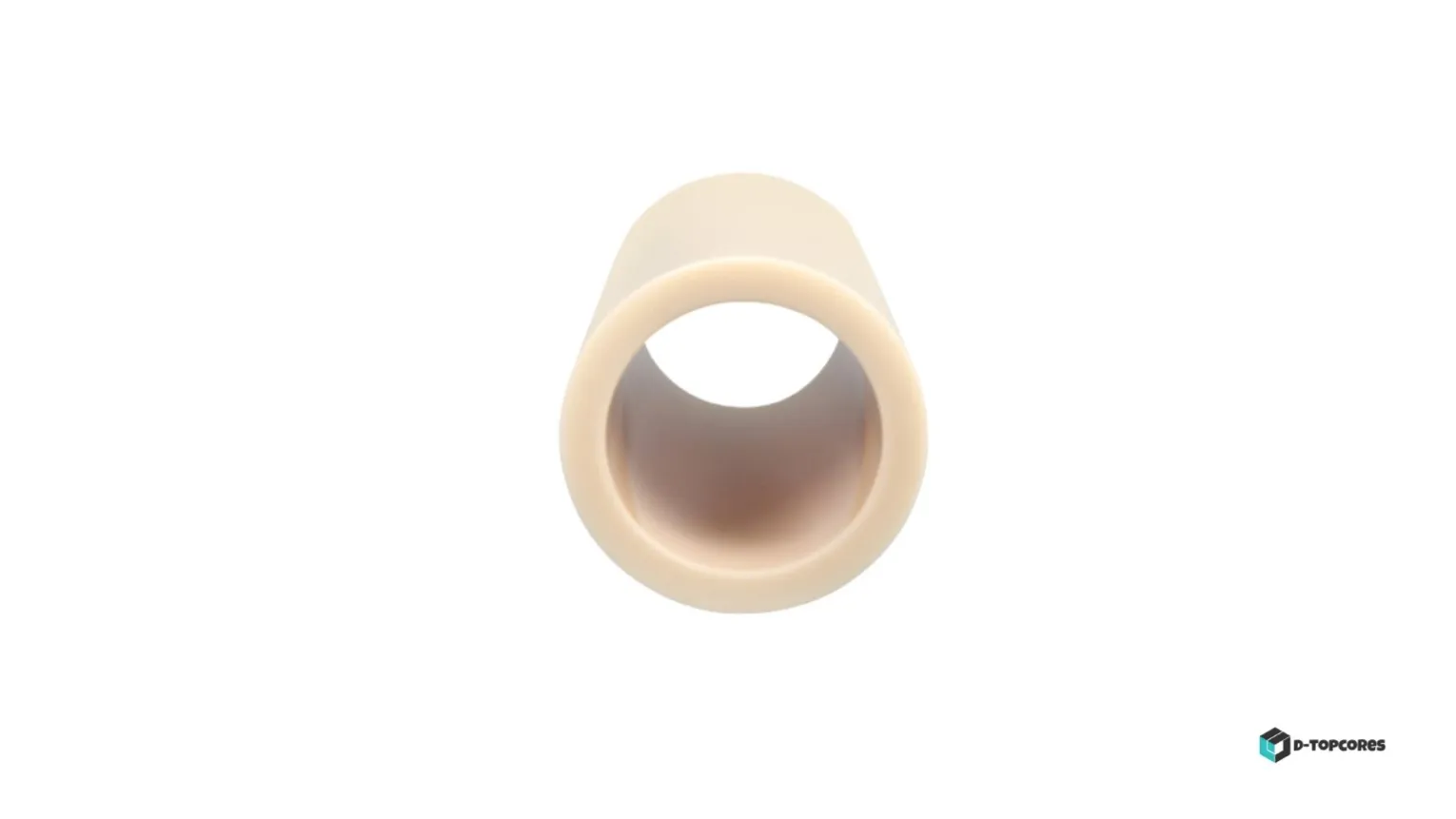
Radial stiffness scales strongly with wall thickness, but material matters as much as geometry. A completely hollow solid wall core with no internal ribs and no spokes gives uniform support at every angle. Ribbed or wheel type constructions are stiffer at the spoke positions and softer between them, which can print a periodic pattern into coated films. Roundness, concentricity and end squareness matter too. An out of round core starts the roll out of round before any film is wound, and an end that is not square makes the roll sit crooked on the chuck.
Specifying a Core for High Tension Lines
Record the winding tension profile, final roll diameter, roll weight, line speed, film gauge, storage temperature and required inner diameter. Then specify radial rigidity, crush resistance, roundness and surface finish as separate line items rather than asking for a generic heavy duty core. Request a dimensional drawing and a crush test report, and set a maximum allowable deflection under the actual roll load. Confirm the chuck type, because a core that fits badly will concentrate load at the jaws and fail early. Finally, verify the surface is ultra-smooth, burr free and low particle, since a rough bore marks the first layers of thin coated film.
Performance and Cost Comparison
- Paper tube, standard wall: lowest purchase price, absorbs moisture, low crush resistance, single use, high scrap risk on high tension lines
- Thin wall plastic core: moderate price, better moisture resistance, still ovalises under sustained load
- Ribbed or wheel type core: locally stiff at the spokes, uneven radial support, periodic imprint risk on coated films
- Thick wall completely hollow plastic core: higher unit price, uniform radial rigidity, high crush resistance, reusable across many runs
- Return on investment: the extra cost per core is small compared with one scrapped battery material jumbo roll and the line time lost to a collapse
Recommended D-TOP Cores
For high tension battery material winding, D-TOP engineers typically recommend a completely hollow core with a thick solid wall and an ultra-smooth surface. Where edge sensitivity is the main concern, a precision chamfered PVC core is the usual alternative. For higher temperature specialty polymer programmes, a high stability ABS core is the starting point. Run a trial roll on your own rewinder before committing to a production order, because chuck fit and creep appear only under real line conditions.
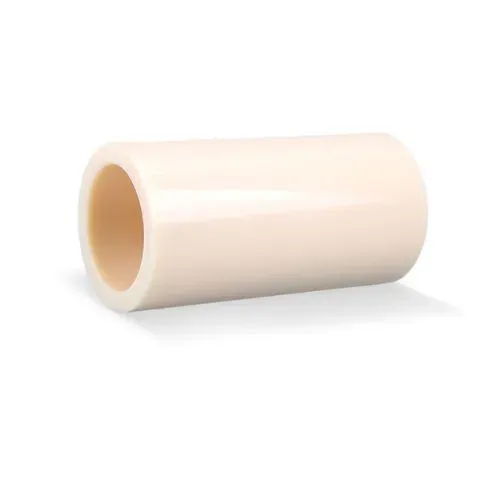
Thick-Wall PVC Winding Core for High-Tension Battery Material Winding
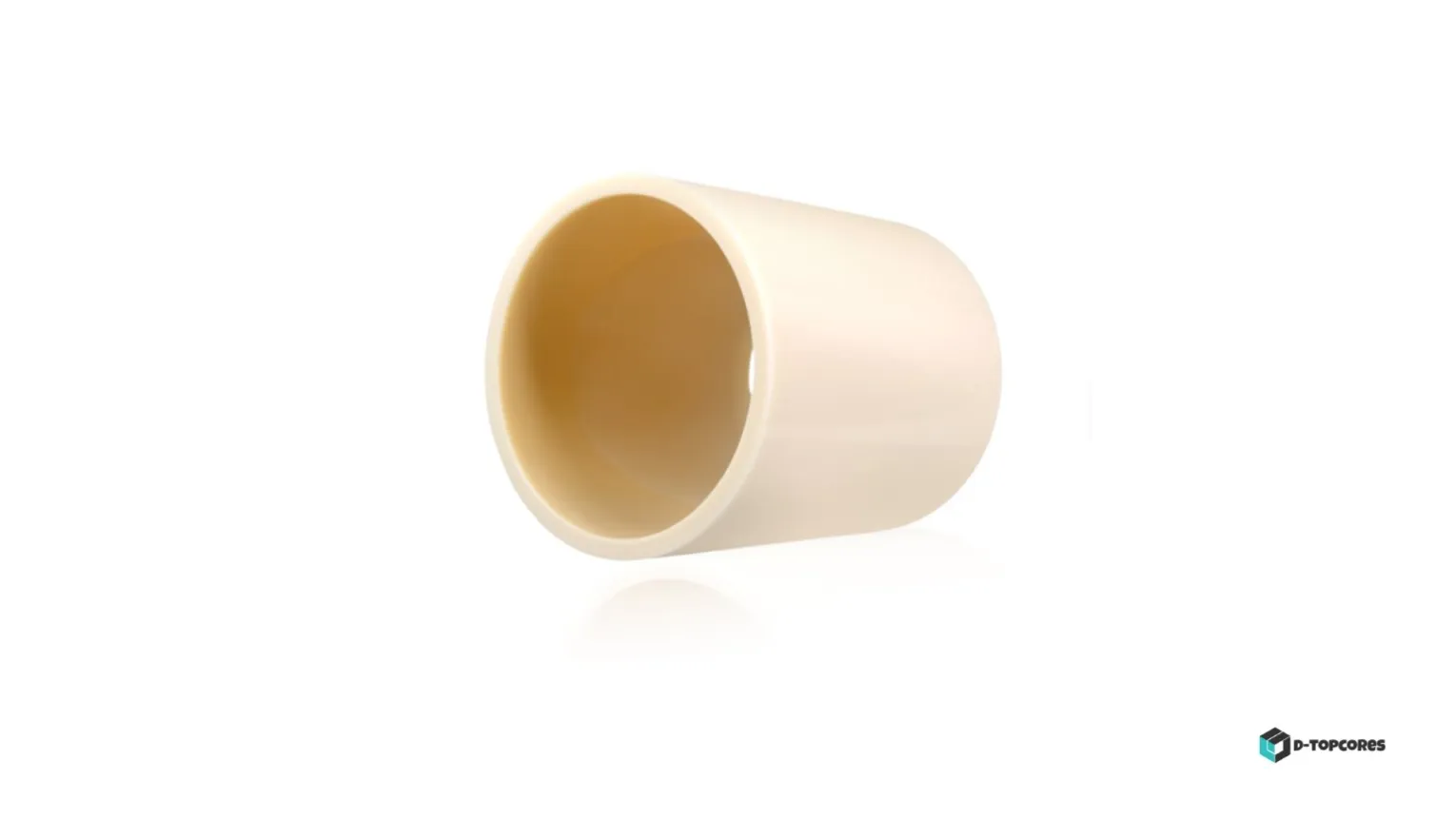
Custom PVC Winding Core with Chamfered Edges for Scratch-Free Functional Film Winding
Conclusion and Next Steps
Core deflection is a specification problem, not a tension setting problem. Define the load, specify radial rigidity and crush resistance as measurable requirements, verify roundness and surface finish, and confirm the wall build against a test report rather than a catalogue claim. Our engineering team can review your tension profile, confirm the specification and arrange free samples for line trials.
Email: dingshangcores@gmail.com
Tel and WhatsApp: +86 15062410306