Industry Information
Why Chamfered Core Edges and Burr-Free Surfaces Matter in Functional Film Winding
Learn how chamfered core ends and burr-free surfaces prevent inner layer scratches in functional film winding. Request a D-TOP engineering review.
Why Chamfered Core Edges and Burr-Free Surfaces Matter in Functional Film Winding
Introduction
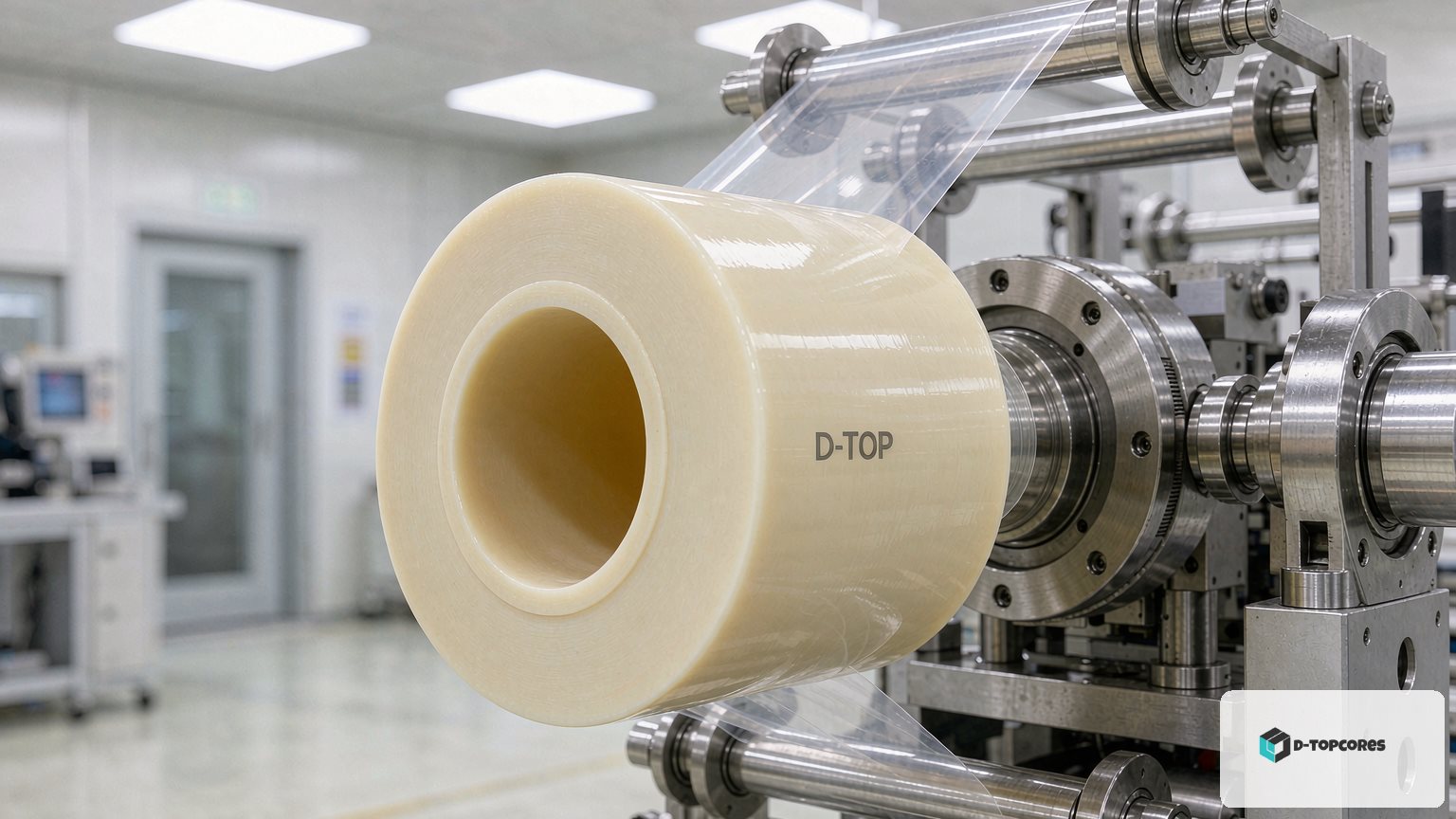
When a functional film roll shows a repeating line near the core, the first suspects are usually tension, roller alignment and slitting knives. The winding core is examined last, yet it is the only component in direct contact with the most valuable and most vulnerable part of the roll. Functional films, optical coatings and specialty polymer webs are thin, coated and easily marked. A square cut core end with a sharp lip, or a surface carrying machining burrs and swarf, concentrates pressure on the first few metres of web. Each revolution repeats the contact. What looks like a minor finishing detail becomes a measurable scrap length on every roll produced.
How Core Edges Damage Sensitive Webs
Three mechanisms account for most core induced defects on precision rewinding lines.
- Sharp end lips: a square cut end creates a hard corner where the film changes direction. Under winding tension this corner imprints a line into the inner layers and can start a tear in thin gauge webs.
- Burrs and swarf: cutting and trimming leave microscopic fragments. These scratch coatings, generate particles and contaminate cleanroom converting areas.
- End face runout: uneven end faces make the roll sit out of square on the chuck. The web tracks to one side, producing telescoping edges and gauge variation in the first layers.
Chamfer Geometry and End Finish
What a Chamfer Actually Does
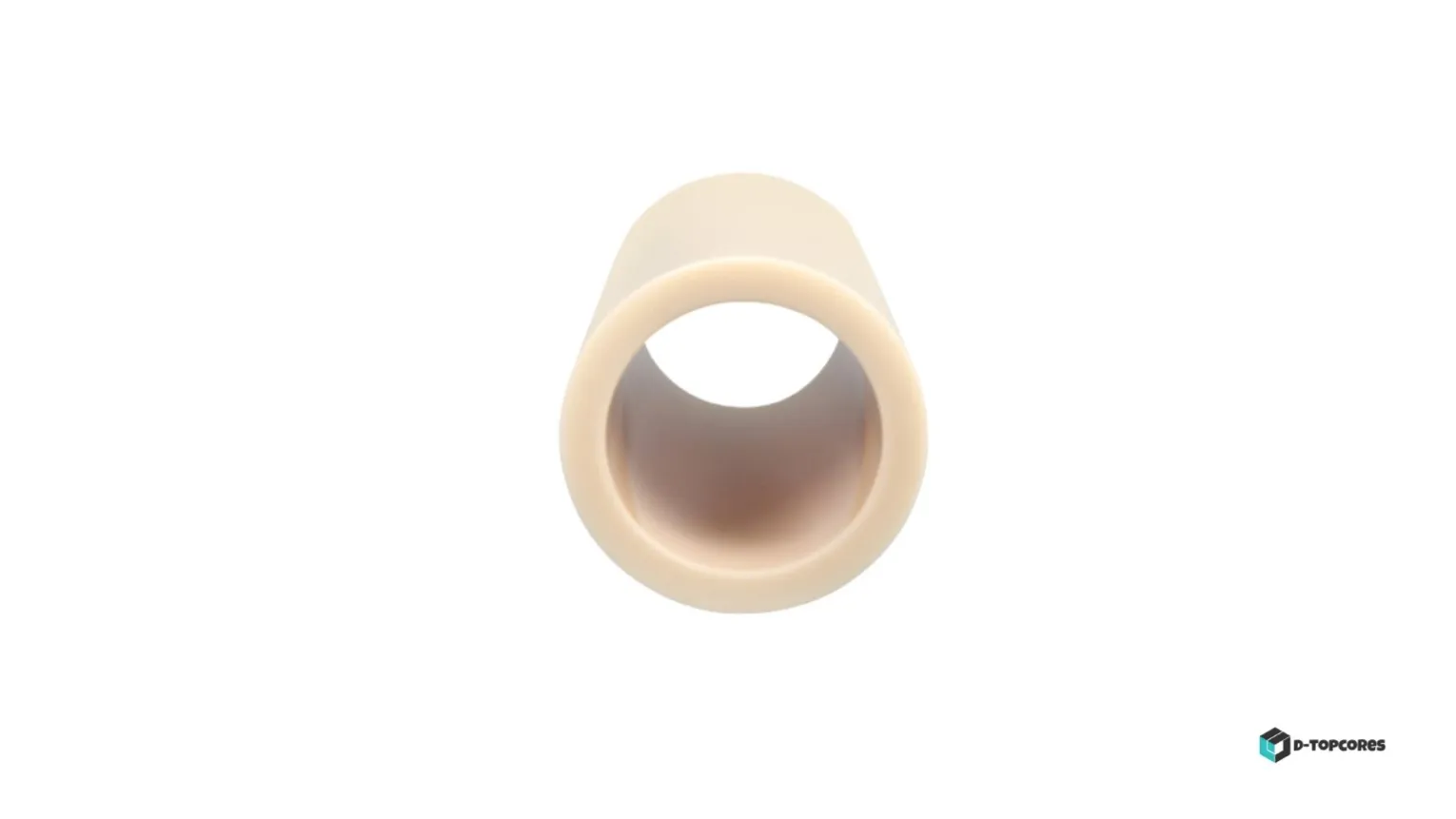
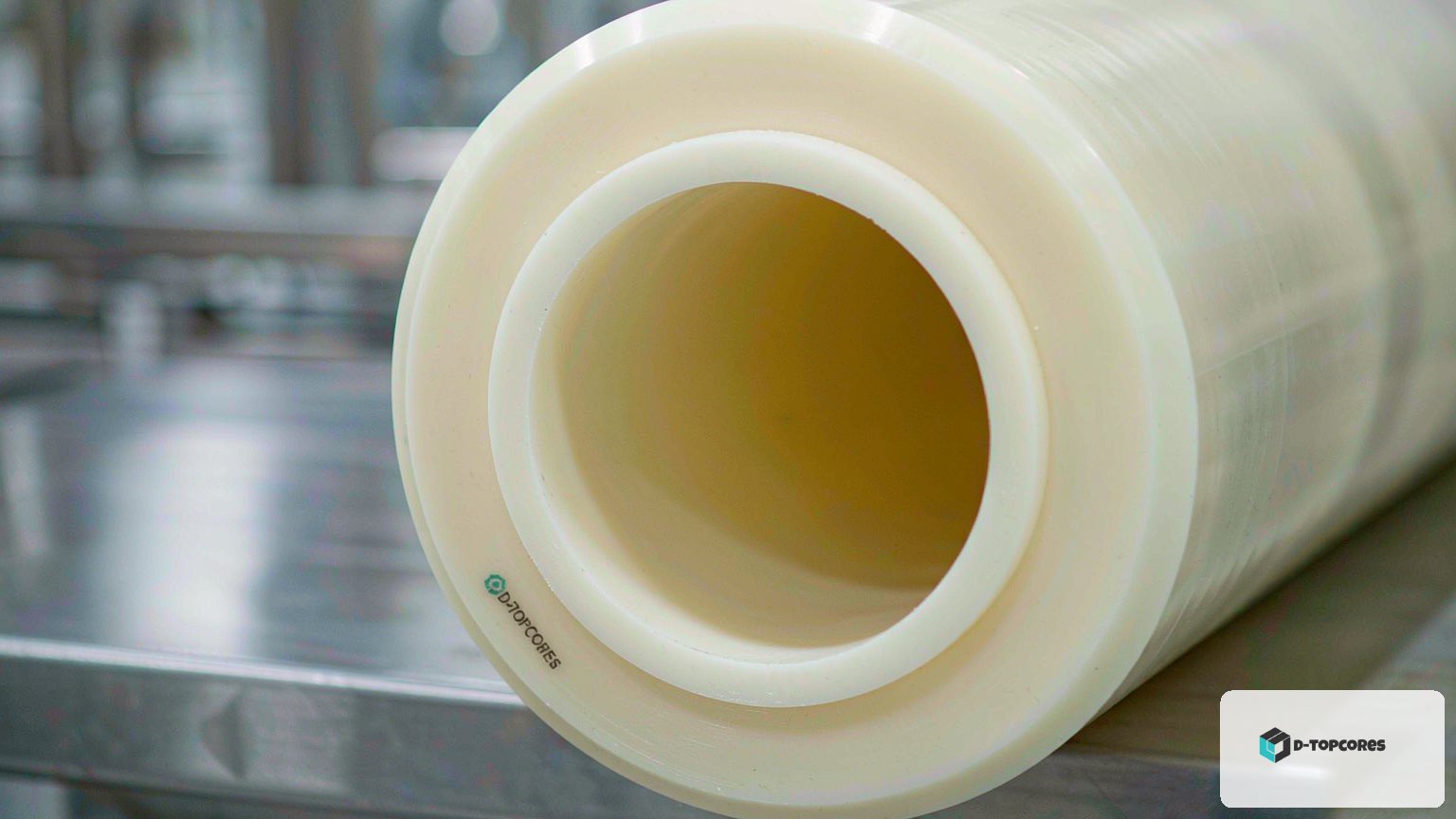
A chamfer replaces the sharp 90 degree corner with a controlled angled transition. The film no longer bends over a knife edge. Contact pressure is distributed over a wider land, and the risk of a start up imprint falls sharply. The angle and land width should be specified on the drawing, not left to the machine operator, because an oversized chamfer reduces usable core length and an undersized one leaves a functional lip.
Bevels, Radii and Burr-Free Cutting
A bevel and a radius serve a similar purpose with different geometry. A radiused end is gentlest on very thin webs but harder to hold consistently in production. Whichever profile is chosen, the acceptance criterion is the same: a burr free, swarf free end that passes a wipe test with a clean lint free cloth. Deburring must be followed by cleaning, not just visual inspection.
Surface Finish Across the Whole Core
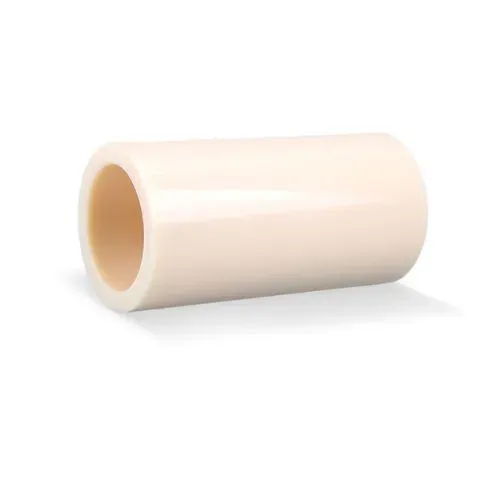
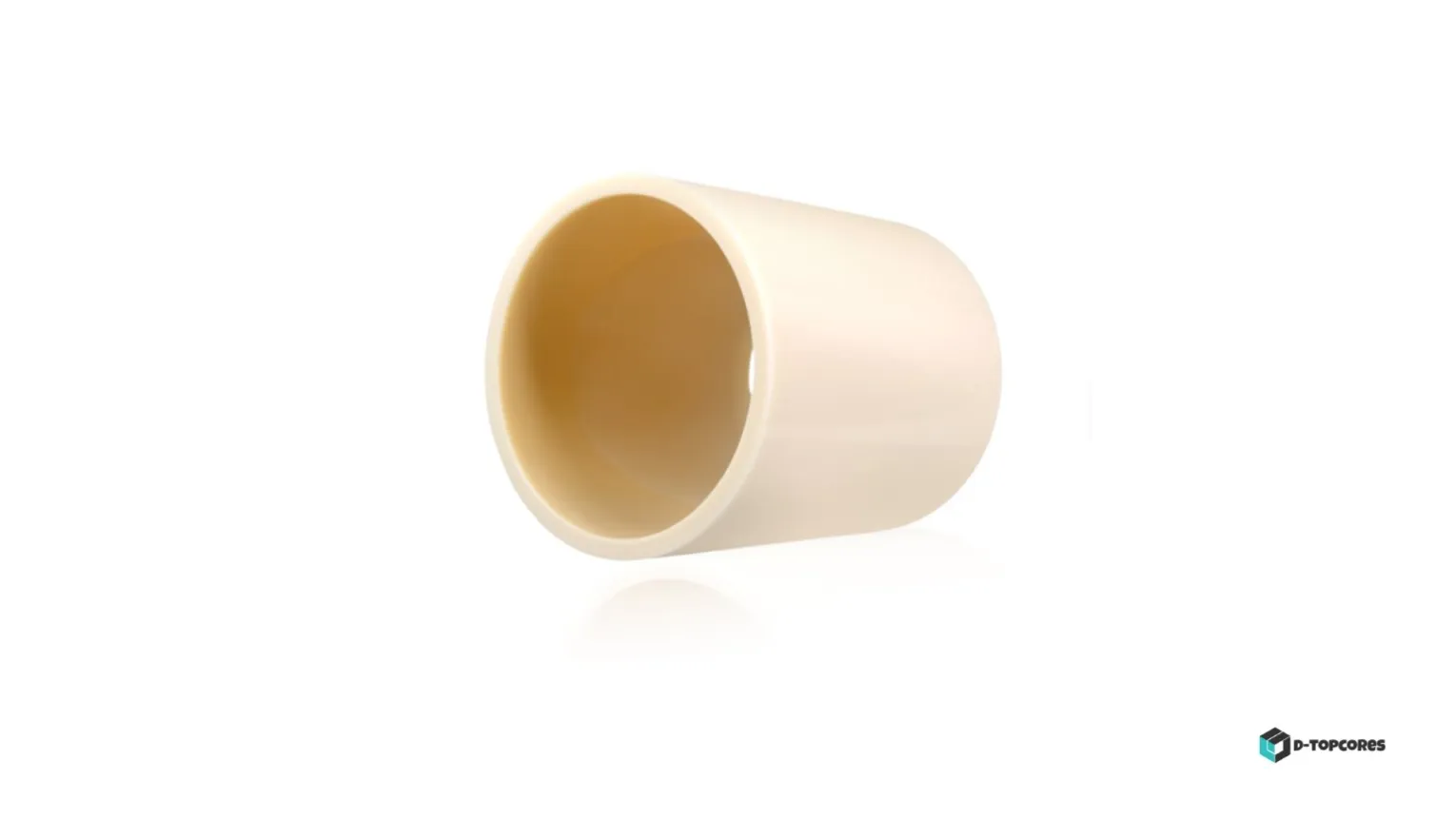
End geometry alone is not enough. The bore and outer surface must be ultra-smooth and low particle. A completely hollow solid wall core with no internal ribs and no spokes gives uniform radial stiffness, so the web sees the same support at every angle. Ribbed or reinforced constructions concentrate stiffness at the support positions and can imprint a periodic pattern into coated films. Precision machined surfaces also avoid the fibre and dust load that paper tubes introduce.
Performance and Cost Comparison
- Paper tube, square cut: lowest purchase price, sharp fibrous edge, high particle load, absorbs moisture, single use
- Standard plastic core, square cut: moderate price, better moisture resistance, sharp lip still imprints thin webs
- Plastic core, deburred only: improved edge, but burr removal without a controlled chamfer leaves geometry varying batch to batch
- Chamfered and polished plastic core: higher unit price, controlled end geometry, ultra-smooth surface, reusable across many runs
- Return on investment: the extra cost per core is small compared with the value of scrapped start up length on coated film, and reusable construction spreads that cost over multiple runs
Specifying a Core for Functional Films
Record the film gauge, coating type, winding tension, line speed, roll weight, required inner diameter and core length. Then specify roundness, radial rigidity, surface finish and end profile as separate line items. Request a dimensional drawing with the chamfer angle and land width called out, and set a burr free and swarf free acceptance criterion. For coated functional films, D-TOP engineers typically recommend the Custom PVC Winding Core with Chamfered Edges for Scratch-Free Functional Film Winding, a completely hollow core with precision chamfered ends and an ultra-smooth surface. For higher temperature specialty polymer programmes, the High-Stability ABS Winding Core for PEEK and Specialty Polymer Films is the usual starting point. Run a trial roll on your own rewinder before committing to a production order, because chuck fit and start up imprint appear only under real line conditions.
Conclusion and Next Steps
Core induced scratches are a specification problem, not a machine problem. Treat the core end as a functional surface: define the chamfer, require burr free and swarf free ends, verify surface finish and confirm the tolerance band your equipment can actually hold. Our engineering team can review your drawing, confirm the specification and arrange free samples for line trials.
Email: dingshangcores@gmail.com
Tel and WhatsApp: +86 15062410306
Recommended D-TOP Cores
Custom PVC Winding Core with Chamfered Edges for Scratch-Free Functional Film Winding
High-Stability ABS Winding Core for PEEK and Specialty Polymer Films