Industry Information
Why Core Stability and Tolerance Control Matter in PEEK and Specialty Polymer Film Winding
Learn how core roundness, rigidity and tolerance prevent wrinkles and scrap in PEEK film winding. Request a D-TOP quote today.
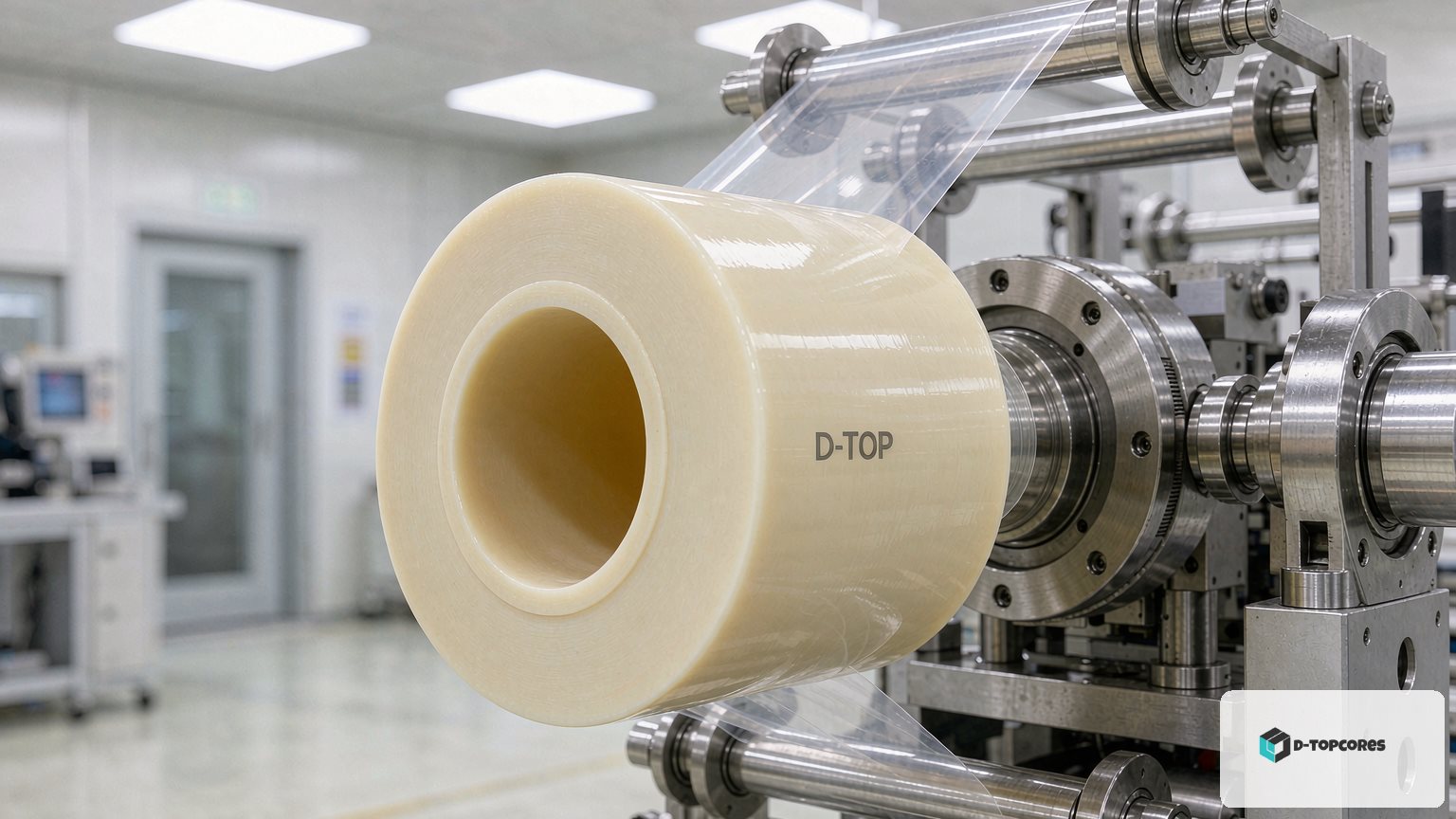
PEEK and specialty polymer films are thin and expensive. Small core defects become wrinkles, vibration and scrapped inner layers. This guide explains which core parameters actually matter.
Introduction
A plant manager rarely blames the winding core first. When a high value PEEK film roll shows wrinkles, telescoping edges or a soft inner layer, the investigation usually starts with tension settings, roller alignment and slitting knives. Yet the core is the foundation of the roll. If it is out of round, too soft or uneven at the ends, every metre wound on top inherits that error. On specialty polymer films priced per square metre, the inner layers are often scrapped before the roll ever reaches the customer.
Where Core Defects Turn Into Scrap
Four mechanisms account for most core related losses on precision winding lines.
- Loss of roundness: a deformed core creates a repeating radial error once per revolution. At high speed this shows up as vibration, tension ripple and gauge variation in the first layers.
- Insufficient radial rigidity: under sustained winding tension the core compresses. The inner layers lose support, the roll becomes soft and the wound package can collapse when removed from the chuck.
- Surface defects: burrs, dust and fibre shedding from paper tubes scratch micro thin films and create particle contamination in cleanroom converting.
- Dimensional drift: variation in inner diameter causes poor chuck grip, slip and runout, while variation in length creates end face misalignment during slitting.
Four Parameters That Actually Control Winding Stability
Roundness and concentricity
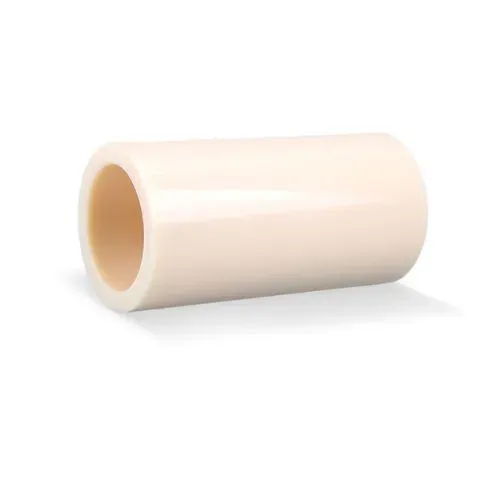
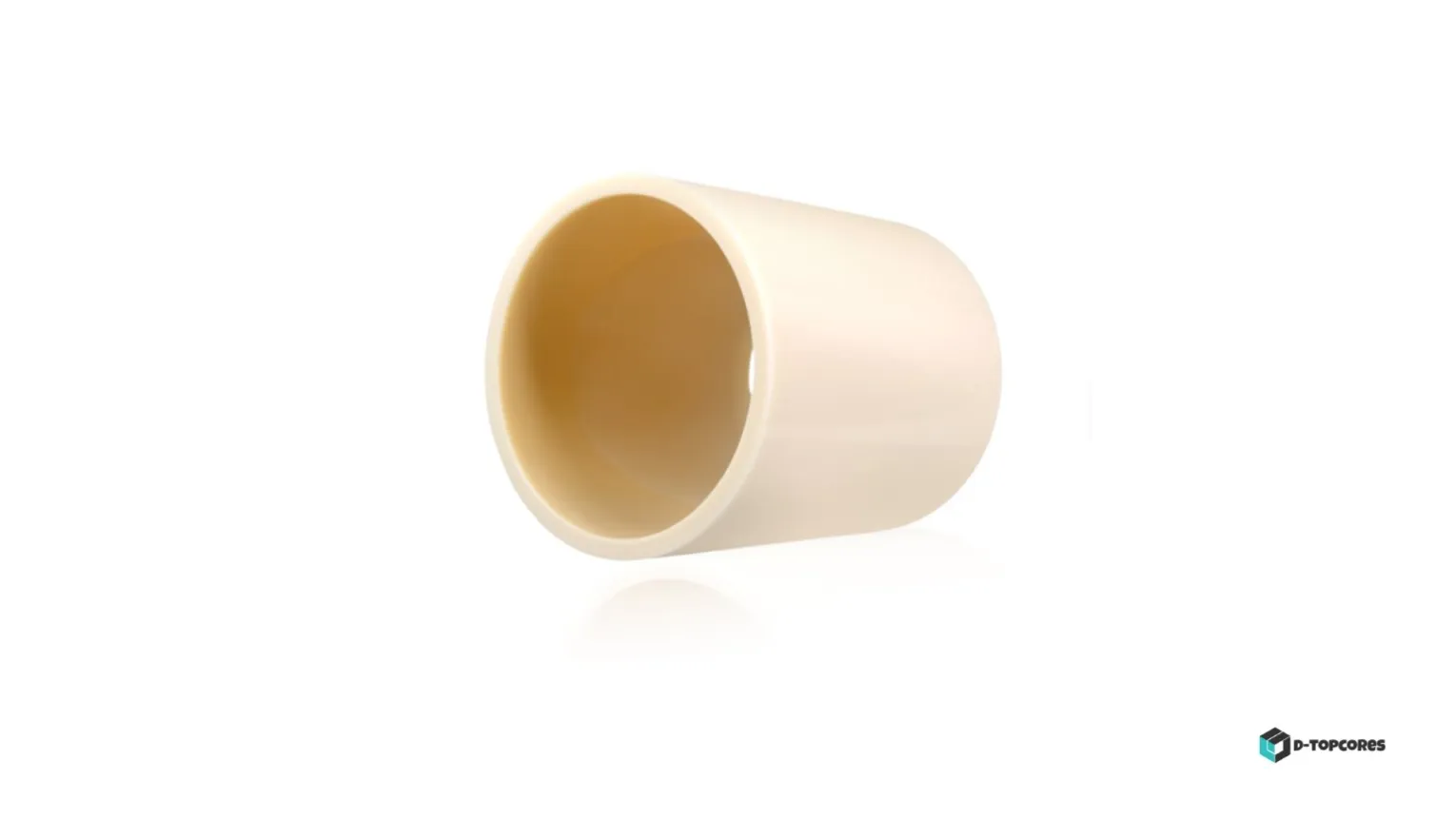
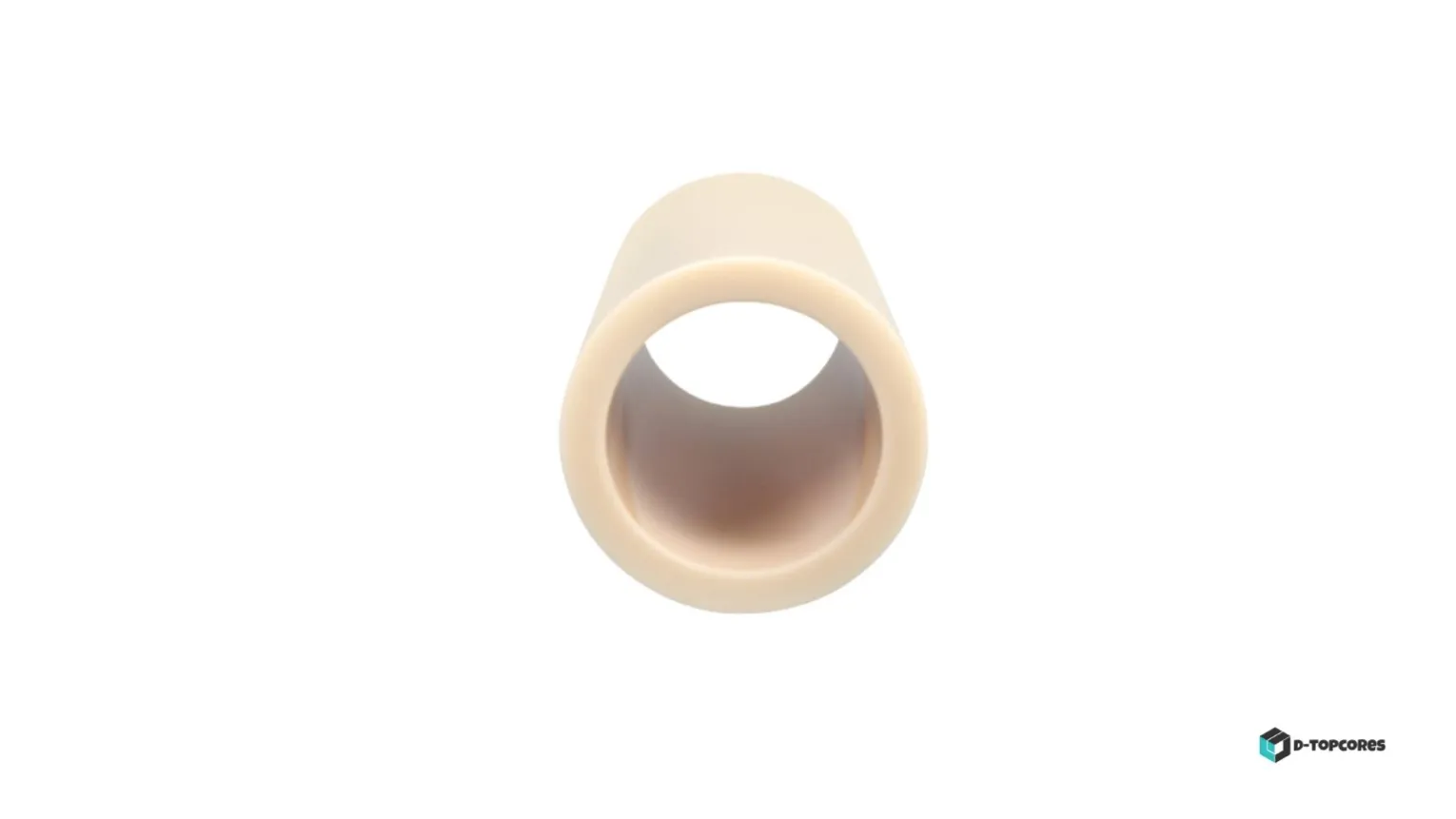
Concentricity determines how uniformly the film is laid down from the first revolution. A completely hollow solid wall core with no internal ribs or spokes gives a uniform radial response around the full circumference. Ribbed or wheel type constructions concentrate stiffness at the spoke positions and can imprint a periodic pattern into sensitive films.
Wall rigidity and crush resistance
Wall thickness and material modulus set the radial stiffness. Natural ABS offers a practical balance of rigidity and impact resistance for medium and high tension winding. The relevant figure is not the nominal wall thickness alone but the measured crush behaviour under the actual winding tension and roll weight of the line.
Surface finish
An ultra-smooth, burr free surface is a functional requirement, not a cosmetic one. Precision machined end faces prevent edge damage, and a clean injection moulded surface avoids the fibre and dust load that paper and low grade recycled cores introduce into cleanroom areas.
Dimensional tolerance
Tolerance defines the spread the process must absorb. For advanced material rewinding, a controlled tolerance such as +/-0.5mm keeps chuck fit, runout and end alignment predictable across batches. Tighter figures such as +/-0.1mm are reserved for specific lithium battery separator programmes where the winding equipment and the film justify them. Stating one tolerance for every product line is a specification error, not a quality claim.
Comparing Core Materials
- Paper tube: low purchase price, but absorbs moisture, sheds fibres, loses roundness and is single use in most plants
- PVC core: better moisture resistance, but can deform under heat and sustained load and may crack at cut ends
- PE and PP core: chemically resistant and light, suited to lower tension packaging films
- Natural ABS solid wall core: stable roundness, high crush resistance, ultra-smooth surface, reusable across many runs
- FRP core: very high rigidity for heavy copper and aluminium foil rolls, at a higher unit cost
Selecting a Core for Specialty Films
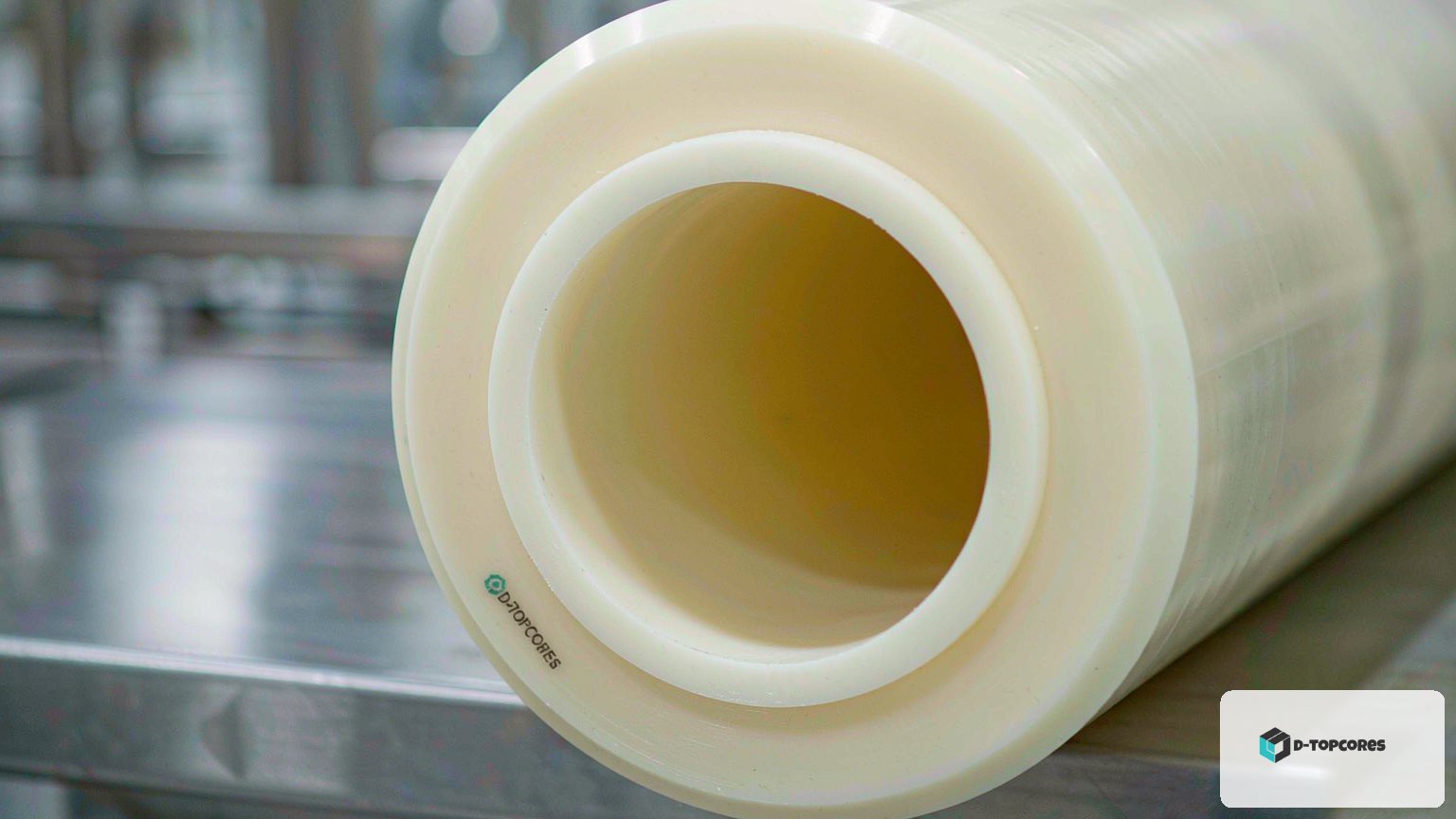
Start from the film, not from the catalogue. Record the winding tension, roll weight, line speed, core length and the required inner diameter. Then match those values to a core with a verified radial stiffness and a tolerance band the equipment can actually hold. For PEEK and other high performance polymer films, D-TOP engineers typically recommend the High-Stability ABS Winding Core for PEEK and Specialty Polymer Films, a completely hollow solid wall core with a controlled tolerance of +/-0.5mm and an ultra-smooth surface. Request a sample wound on your own line before committing to a production order, because line trials reveal chuck fit and runout issues that a datasheet cannot show.
Conclusion and Next Steps
Core related scrap is preventable. Specify roundness, radial rigidity, surface finish and tolerance as separate line items, verify them on a trial roll and treat the core as a process component rather than a consumable. If you are qualifying a core for PEEK, optical or battery separator films, our engineering team can review your drawing, confirm the specification and arrange free samples.
Email: dingshangcores@gmail.com
Tel and WhatsApp: +86 15062410306
Read the High-Stability ABS Winding Core for PEEK and Specialty Polymer Films product page