Industry Information
How Pre-Taped Winding Cores Reduce Changeover Time on Automotive Film Lines
How pre-taped winding cores cut roll changeover time and start up scrap on automotive film lines. Ask D-TOP for a line trial.
Introduction
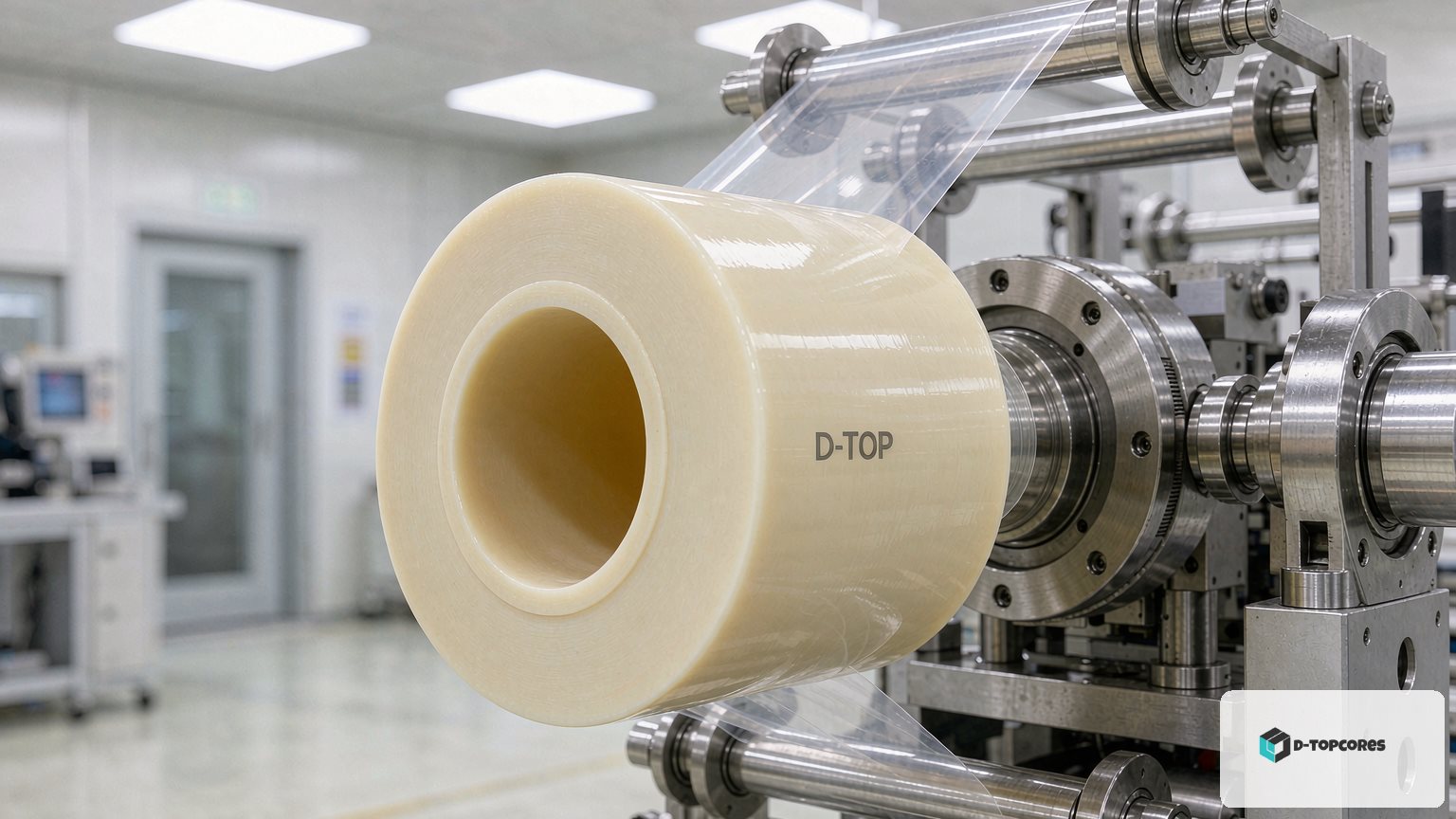
Automotive window tint, paint protection film and decorative films are high value webs. They are also converted in short runs, which means a slitting or rewinding line may stop and restart dozens of times per shift. Each stop costs machine time, operator time and a few metres of saleable film. Most plants blame the brake settings or the operator when a roll starts badly. In practice a large share of changeover loss starts at the core, because the leading edge of the web has to be attached to the core before the line can accelerate. When that attachment is done by hand with loose tape, the result changes with every operator and every shift.
Where Changeover Time Is Actually Lost
The Four Steps in a Manual Roll Change
A typical manual change has four steps: cut and secure the finished roll, fetch a bare core, apply a strip of tape along the core by hand, then thread and align the new web before ramping up speed. The third step is the least standardised. The operator has to judge tape position by eye, smooth out bubbles and trim the ends. On a wide jumbo roll this is done on both sides of the machine, often with gloves and in a hurry.
Three consequences follow. The tape line drifts from the true axis, so the first wrap builds a small angle and the roll telescopes. Adhesive exposed to dust in the converting area loses grip, so the web lifts at the core and has to be re-threaded. And the whole operation adds a variable number of minutes to every change, which no amount of brake tuning can remove.
Why Chuck Fit and Roundness Still Matter
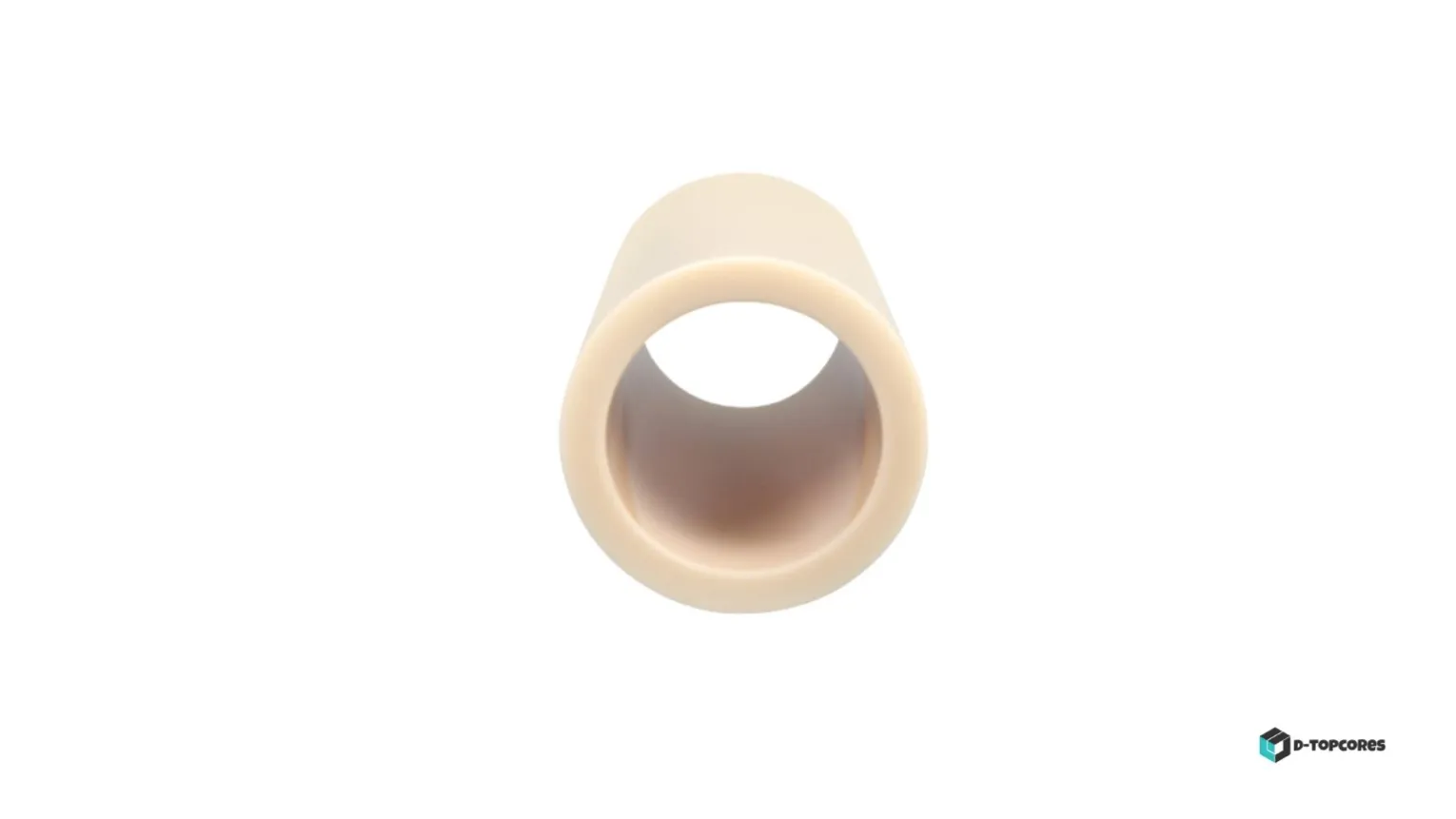
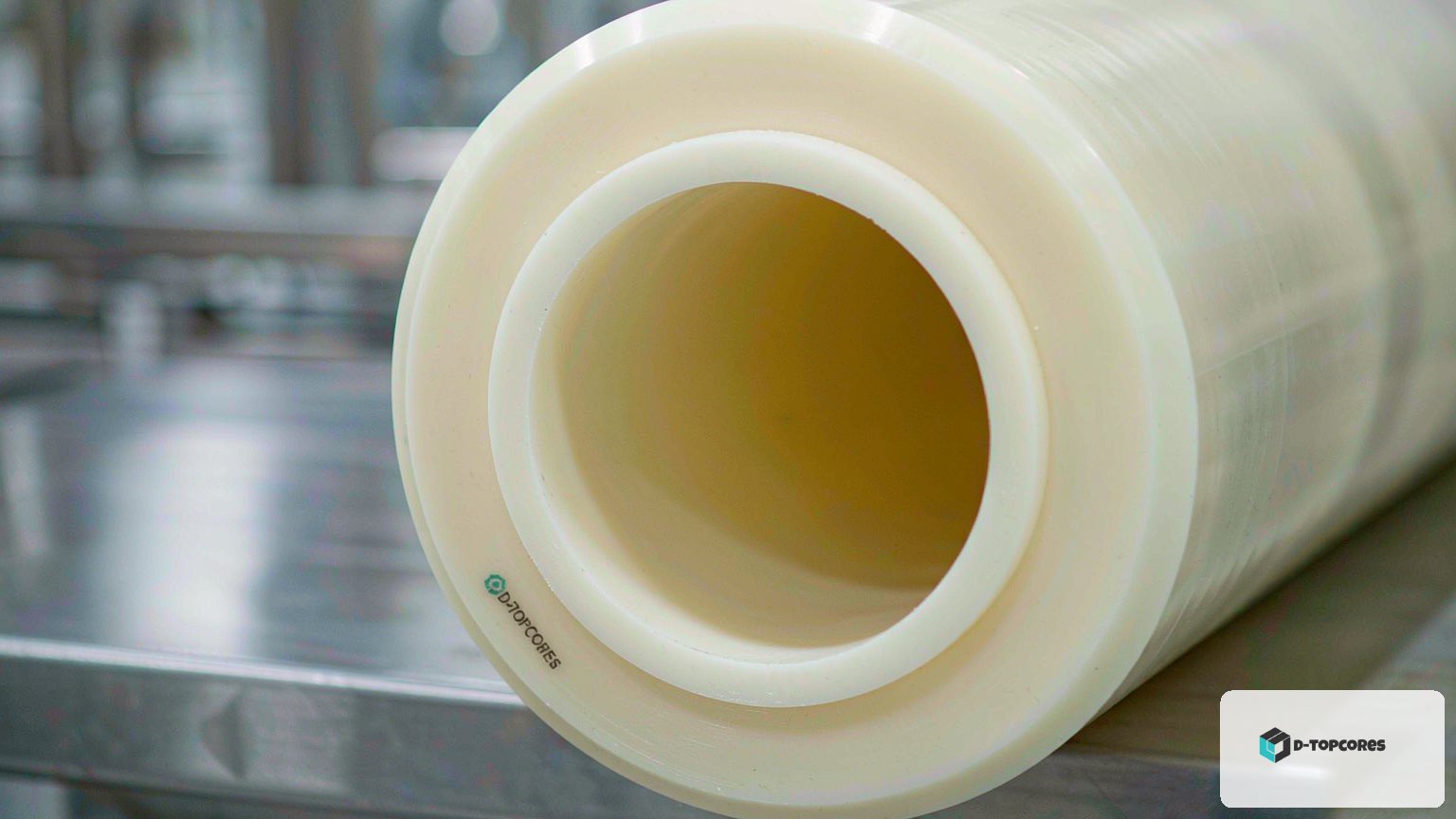
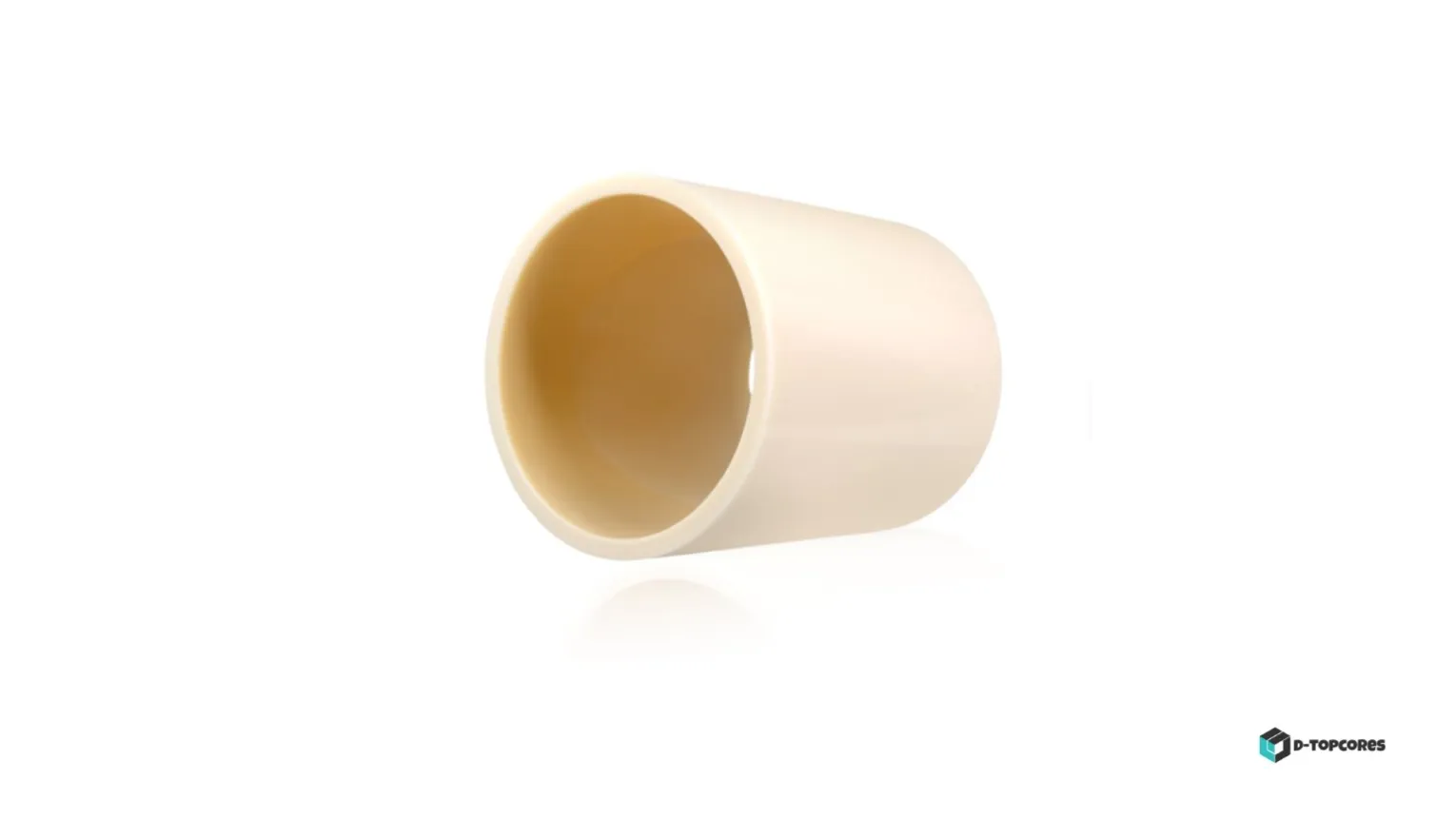
A perfect tape line cannot rescue a core that is out of round. If the bore is oval, the chuck grips unevenly, the roll runs out of round at speed and the tension controller keeps correcting. Paper tubes absorb moisture in storage and change diameter with humidity. Low grade recycled cores vary from batch to batch. A dimensionally stable, completely hollow plastic core with no internal ribs and no spokes gives the chuck a consistent surface every time, so the line reaches stable tension sooner.
What a Factory Pre-Taped Core Changes
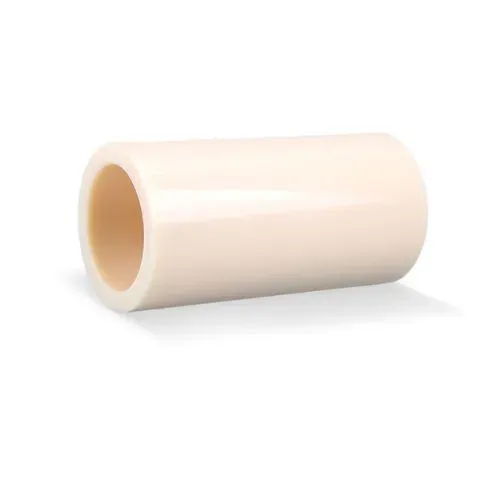
A pre-taped core arrives with the adhesive already applied in a controlled position along the axis. The operator removes the release liner, attaches the leading edge and starts the line. There is no cutting of tape, no judgement about position and no exposed adhesive sitting in a dusty area.
- The start line is straight and identical from core to core, so the first wrap builds square
- Tape is applied in a clean environment and protected by a liner until the moment of use
- Changeover becomes a short, repeatable task that any operator can perform the same way
- Less time at zero speed means more saleable metres per shift on short runs
- Fewer bad starts mean less start up scrap of expensive tinted or coated film
- A round, rigid ABS body keeps chuck fit stable while the line accelerates
- Burr free cut ends avoid marking the inner layers of sensitive films
Performance and Cost Comparison
- Bare paper tube plus hand applied tape: lowest unit price, highest labour per change, humidity sensitive, single use, most start up scrap
- Bare plastic core plus hand applied tape: stable and reusable, but still carries the full manual taping step and its variability
- Factory pre-taped ABS core: highest unit price, lowest labour per change, repeatable start line, reusable, least start up scrap
- On short runs with many changes, the labour and scrap saved usually outweigh the small price premium; on long continuous runs the benefit is smaller
- Exact savings depend on your change frequency, film value and labour rate, so run a timed trial on your own line before setting a target
Specifying a Pre-Taped Core for Your Line
Start with the interface, not the tape. Confirm the inside diameter that matches your chucks, the outside diameter your winding recipe expects, the core length or roll width, and the dimensional tolerance you can hold at line speed. All of these should be agreed on a drawing before tooling. Then specify the adhesive: tape type, tape width, liner type and the peel behaviour you need for your film. If any of these values are not yet fixed, record them as to be confirmed rather than accepting a generic catalogue number. Ask for samples and time a full shift with them. Finally, check the bore by eye and by gauge: it must be completely hollow with no internal ribs, no spokes and no supports, and the cut ends must be smooth and burr free.
Conclusion and Next Steps
Changeover loss on automotive film lines is mostly a repeatability problem. Hand applied tape and humidity sensitive paper cores introduce variation exactly where the line is most vulnerable, at the first wrap. A factory pre-taped, dimensionally stable ABS core removes both variables and turns a skilled judgement call into a short standard step. Measure your current change time and start up scrap first, then trial pre-taped cores on one line and compare the numbers. Send your core drawing and film details to dingshangcores@gmail.com or call +86 15062410306. Our engineers will confirm the specification, arrange samples and quote a realistic lead time.
Recommended D-TOP Cores
D-TOP supplies dimensionally stable, completely hollow plastic winding cores for automotive film lines. Two products to consider for a line trial are listed below.
Pre-Taped ABS Winding Core for Automotive Window Tint Jumbo Rolls
Custom PVC Winding Core with Chamfered Edges for Scratch-Free Functional Film Winding